Niacinamide seasonal skincare routine guide to calm redness
"A healthy glow is not about a sudden change in products, but about the careful management of active ingredients and skin barrier health."
A successful seasonal skincare routine requires adjusting active ingredients to match environmental changes while maintaining the skin's natural barrier. This guide focuses on introducing actives like retinol and vitamin C through a gradual, strategic approach to minimize irritation.
Key takeaways include starting with low concentrations, pairing ingredients like niacinamide to calm redness, and understanding the timeline for visible results.
How do I start a seasonal skincare routine?

As the chilly autumn wind whistles through the window, I stand in my dim bathroom and carefully massage a soothing niacinamide serum into my cheeks.
An empty bathroom counter sits ready for a new set of bottles, each promising a different level of skin transformation. When building a seasonal skincare routine, the most effective method is to introduce active ingredients one at a time to monitor how your skin reacts.
According to the principles of skin health, you should introduce actives one at a time, every 2–3 weeks. This gradual introduction prevents overwhelming the skin barrier and allows you to identify which product might be causing a reaction.
For example, if you introduce a new acid and a new retinoid in the same week, you will not know which one caused redness.
A successful transition involves choosing the right strength for your specific skin type. You might start with a gentle cleanser and a basic moisturizer before adding targeted treatments. If you are using a new product, wait at least two to three weeks before adding another to ensure stability.
- Assess your skin's current hydration levels.
- Swap heavy creams for lighter lotions during warmer months.
- Increase moisturizer thickness during colder months.
What are the best ways to use vitamin C and niacinamide?
A morning routine involves applying a serum to a clean face, feeling the cool liquid spread across the skin. Using a seasonal skin care guide effectively means knowing how to layer antioxidants and barrier-supportive ingredients for maximum benefit.

For brightening and defense against pollution and UV, you can use Vitamin C. Specifically, L-ascorbic acid at 10–15% is suitable for normal or oily skin, while those with sensitive skin might prefer THD ascorbate or sodium ascorbyl phosphate.
You should apply vitamin C first, then follow with niacinamide 2–5% to support the barrier and calm redness.
| Ingredient | Purpose | Typical Concentration |
|---|---|---|
| Vitamin C | Brightening and UV defense | 10–15% (L-ascorbic acid) |
| Niacinamide | Calming redness and barrier support | 2–5% |
I remember testing a high-concentration serum and realizing that my skin needed the soothing effects of niacinamide to balance the intensity. This pairing helps mitigate the potential irritation caused by stronger acids.
In this sequence, the second step is the most significant.
How can I safely use retinol for better skin?
A person stands before a mirror at night, carefully applying a pea-sized amount of cream to their face. Effective skincare by season often involves adjusting the frequency of retinoids based on humidity and skin sensitivity.
To avoid excessive peeling or redness, you must follow a "low and slow" approach. Begin with a retinol concentration of 0.2–0.3% for two to three nights weekly, increasing the frequency only as your skin tolerates it.
This method helps the skin adapt to the active ingredient without causing significant damage.
- Select a low-strength retinol, such as 0.2–0.3%. 2. Apply the product only two to three nights weekly at first. 3. Increase frequency gradually as your skin becomes more resilient.
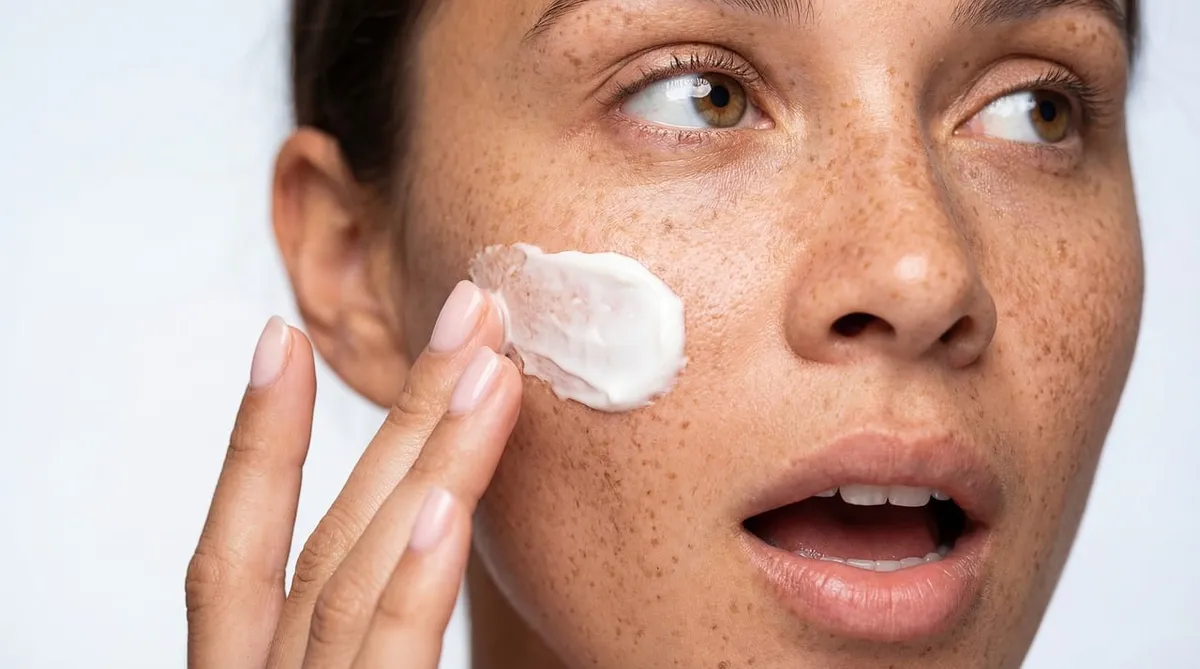
If you are using a retinoid, you can pair it with azelaic acid (10–15%), which targets redness and uneven tone and is generally retinoid-friendly. This can help manage the texture changes that occur during the acclimation phase.
What should I do about breakouts and skin irritation?
A hand reaches for a small tube of spot treatment to address a single blemish on the chin. Managing changing season skincare requires distinguishing between temporary breakouts and actual irritation.
For active breakouts, you can use spot care such as 2% salicylic acid or benzyl peroxide (2.5–5%) as either a short-contact or leave-on treatment. For those experiencing redness, niacinamide can be helpful as it calms the skin.
If you are using stronger treatments, be mindful that "purging" that lasts beyond 6–8 weeks or occurs outside of oilier zones may be irritation rather than progress.
If you experience a flare-up, it is important to check your usage. For instance, if you use a cleanser, you might try a massage for 30–60 seconds followed by a rinse with lukewarm water to soothe the area. Always monitor whether the reaction stays localized to oily zones or spreads.
How long does it take to see results?
A person looks in the mirror after several weeks, noting a subtle change in their complexion. Understanding the timeline of skin cell turnover is vital for anyone following a seasonal skin care guide.

Results do not happen overnight, and consistency is the most important factor. You can expect 2–4 weeks for improvements in hydration and reduced oiliness. For clearer pores and fewer breakouts, it typically takes 4–6 weeks.
Finally, you can expect 8–12 weeks for improvements in skin tone and fine lines from the use of retinoids and vitamin C.
A limitation to this timeline is that results are dependent on individual skin biology and the specific concentrations used.
According to Southbank Centre, the item is on record.
This order does not hold, however, when the figure is not 15%.
The same subject is also called seasonal skin management.
This part also covers summer vs winter skincare.
This part also covers best routine for each season.
This part also covers seasonal skin recovery tips.
summer vs winter skincare
Related




Comments 0