Vitamin C 10-15% guide for Summer skincare by skin type
"The sun's intensity changes our skin's needs, requiring a shift in how we select active ingredients and protective layers."
Effective summer skincare by skin type requires understanding how specific ingredients like Vitamin C or Niacinamide interact with UV exposure and individual skin sensitivity.
To maintain a healthy complexion, you must select products that balance hydration with oil control while prioritizing broad-spectrum protection. This guide covers ingredient selection, routine adjustment, and regulatory labeling to help you navigate seasonal changes.
How do I choose the right ingredients for summer skin?

At dawn, she squeezes a drop of golden vitamin serum onto her fingertip, feeling the cool liquid glide across her warm cheek.
A person stands before a bathroom mirror, carefully squeezing a lightweight serum onto their fingertips to prepare for the day. Selecting the right chemistry is the first step in a successful seasonal transition.
According to the WHO, in 2025, sunscreen was added to the WHO list of essential medicines to prevent skin damage and skin cancer in people with albinism.
For those with normal to oily skin, using Vitamin C in the form of L-ascorbic acid (10–15%) can help brighten the complexion and defend against pollution and UV exposure.
If your skin is more sensitive, switching to derivatives like THD ascorbate or sodium ascorbyl phosphate can provide similar antioxidant benefits without the irritation. Niacinamide at a 2–5% concentration is another excellent choice to calm redness and support the skin barrier during heat.
When managing oily skin, you might try a spot treatment with 2% salicylic acid or 2.5–5% benzoyl peroxide for active breakouts. This can be used as a short-contact or leave-on treatment to manage congestion.
For an effective routine, you can apply Vitamin C first, followed by Niacinamide to support the barrier and calm redness.
How can I best manage my summer routine? Summer skincare by skin type In the humid bathroom, he rubs the soothing vitamin cream into his skin while watching the morning sun rise through the window.
A person carefully applies a thin layer of moisturizer, checking the texture to ensure it does not feel too heavy in the humidity. Managing a routine requires a strategic approach to active ingredients to avoid irritation.
To avoid overwhelming your skin, introduce actives one at a time, waiting every 2–3 weeks between new additions.
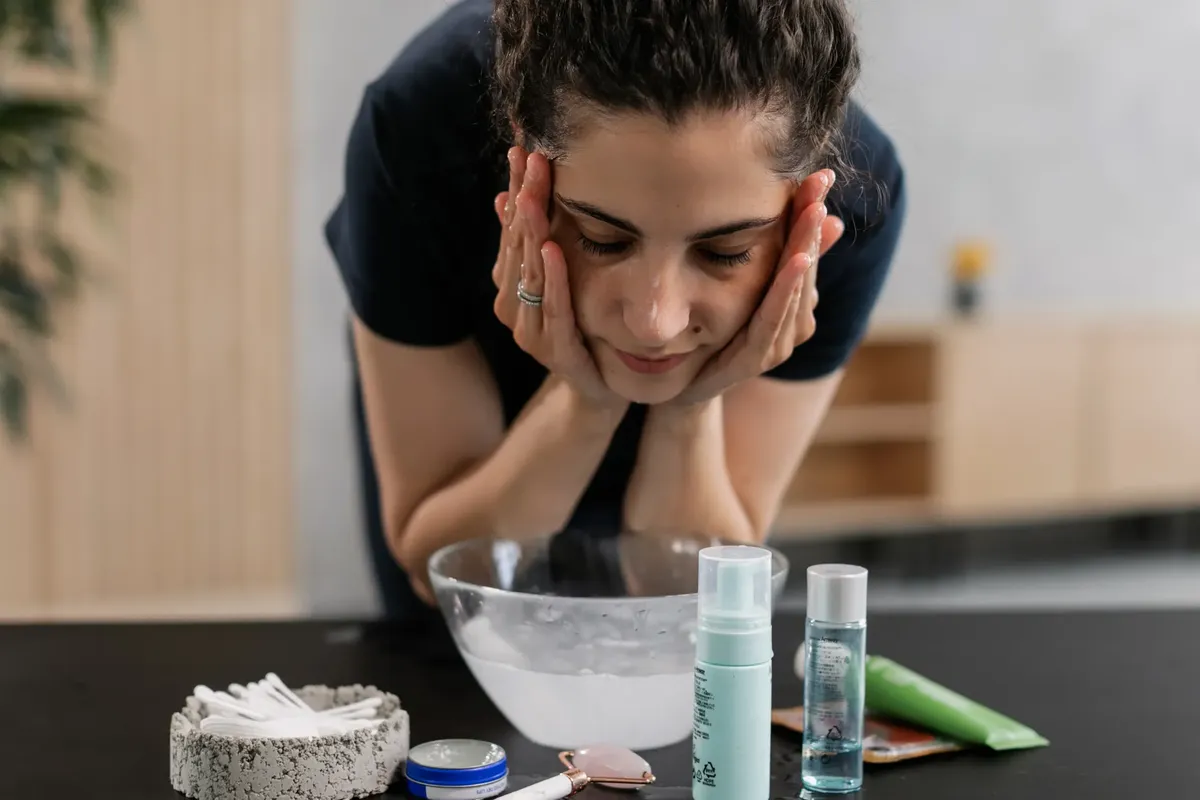
A common strategy is to pair ingredients strategically; for example, Niacinamide can reduce irritation, while azelaic acid (10–15%) targets redness and uneven tone and is generally retinoid-friendly.
You might also consider a "low and slow" approach with retinol at 0.2–0.3% two to three nights weekly, increasing only as tolerated.
| Skin Goal | Targeted Ingredient | Expected Timeline |
|---|---|---|
| Hydration & Oil Control | Vitamin C / Niacinamide | 2–4 weeks |
| Clearer Pores | Salicylic Acid / Benzoyl Peroxide | 4–6 weeks |
| Tone & Fine Lines | Retinoids / Vitamin C | 8–12 weeks |
I personally find that checking the skin's reaction every two weeks is essential when introducing these changes. It is vital to monitor how the skin responds to the combination of heat and new actives.
How should I apply sun protection?
A person reaches for a bottle of sunscreen before heading out the door into the bright morning light. Understanding protection is the most critical part of any summer skincare routine.
According to the FDA, a comprehensive set of rules issued in June 2011 and taking effect in 2012–2013 was designed to help consumers identify and select suitable sunscreen products offering protection from sunburn, early skin aging, and skin cancer.
It is important to ensure your product is labeled as "broad spectrum," which, per 2012 rules, means providing UVA protection proportional to the UVB protection using a standardized testing method.
Reapply sunscreen every 2 hours when outdoors and consider mid-day reapplication indoors if you are near windows. Note that the term "waterproof" or "sweatproof" is prohibited, as are terms like "sunblock" or "instant protection" without specific approval.
What are the limits of my seasonal skincare? A person looks at a small patch of redness on their cheek, wondering if it is a reaction to the sun or a new product. Limitations often arise from the unpredictable nature of skin sensitivity.

One limitation to keep in mind is that "purging" that lasts beyond 6–8 weeks or occurs outside of traditionally oilier zones may be irritation rather than progress. If you experience such reactions, you should re-evaluate your product application.
The subject here is Summer skincare by skin type.
The same subject is also called Skin type summer routine.
The same subject is also called Best summer ingredients.
The same subject is also called Choosing summer products.
This part also covers Acne prone summer care.
This part also covers Dry skin summer routine.
This part also covers Oily skin summer tips.
Acne prone summer care
Related
- Skin type sunscreen routine: 90% cases caused by UV exposure
- Skin type ingredient guide: Guide for skin thickness 0.5 mm
When might ingredient changes be necessary due to sun intensity changes? 1. The sun's intensity changes our skin's needs, prompting a necessary shift in the selection of active ingredients and protective layers. 2. When UV exposure increases, the skin's defensive requirements elevate, making robust broad-spectrum protection more critical. 3. Increased intensity might also necessitate a switch to gentler antioxidant derivatives if the skin shows signs of heightened sensitivity.
How does skin sensitivity affect ingredient choices during high intensity periods? 1. If skin sensitivity increases, substituting potent Vitamin C forms with THD ascorbate or sodium ascorbyl phosphate becomes a prudent adjustment. 2. For highly reactive skin, monitoring the reaction to the combination of heat and new actives every two weeks is a necessary precaution. 3. The skin barrier support offered by Niacinamide remains beneficial even when the sun's intensity changes, helping to calm redness.
What cautions should be observed when adjusting the routine? 1. Introducing actives one at a time, with a waiting period of two to three weeks between additions, prevents overwhelming the skin. 2. If purging persists past the six-to-eight-week mark or occurs outside typical oily zones, the condition should be treated as irritation. 3. It is vital to monitor how the skin responds to the combination of heat and new actives when making routine adjustments.
Disclaimer: This article is general information, not medical advice. Consult a qualified healthcare professional before taking any supplement or medication.






Comments 0